 Garrie AI: Your Cable Guide
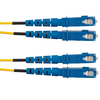
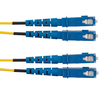
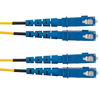
Opti-Core Fiber Optic Patch Cord Pigtail


Select a Variant
Where are we? 4 Continents 9 Countries


Got any Questions?
Speak with a real person who will go out of their way to help you!
Call Us: 1-516-482-6313Text Us: 1-516-703-3460
Quick Support







Product Information
Specification
About:
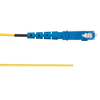
Opti-Core fiber optic patch cord pigtails are a type of fiber optic cable that is used to connect fiber optic equipment or fiber optic cabling. A pigtail is a fiber optic cable that has an optical connector on one end and a length of exposed fiber at the other end. The connector end is used to link to equipment, while the exposed fiber end is typically spliced to another fiber optic cable.
Also Known As:
• Fiber optic pigtail
• Fiber pigtail
• Optical fiber pigtail
• Patch cord pigtail
Common Applications:
• Telecommunications networks
• Data centers
• Local Area Networks (LANs)
• Wide Area Networks (WANs)
• Cable television networks (CATV)
• Fiber-to-the-Home (FTTH) installations
• High-speed broadband systems
• Optical switch interframe connections
Standards:
• International Electrotechnical Commission (IEC) standards, like IEC 61754 and IEC 60793
• Telecommunications Industry Association (TIA) standards, like TIA-568
• Institute of Electrical and Electronics Engineers (IEEE) standards, for Ethernet-based applications
• ISO/IEC standards like ISO/IEC 11801 for generic cabling systems
Construction:
• Optical fiber: Single-mode or multi-mode fibers are used depending on the application.
• Protective jacket: This layer protects the optical fiber from physical damage and environmental conditions.
• Connector: Common types include LC, SC, ST, and MTP/MPO, and they are usually factory-terminated for precision and reliability.
• Strength members: These are materials within the cable that provide tensile strength.
• Sheath: The outer covering that provides additional protection for the entire assembly.
Features:
• Precision connector termination for high-quality signal transmission.
• Low insertion loss and back reflection, ensuring efficient data transfer.
• High tensile strength to withstand pulling and bending.
• Good temperature range adaptability, allowing for use in various environmental conditions.
• Typically available in different lengths to suit various installation needs.
• Flame-retardant jackets which may be required for compliance with building codes and safety standards.
• Sometimes color-coded jackets for easy identification of different types of fibers (e.g., orange for multimode, yellow for single-mode).
Download PDF Spec Sheet
Reviews
Call Us: 1-516-482-6313 Text Us: 1-516-703-3460