Garrie AI: Your Cable Guide


2 AWG vs 4 AWG Wire: How to Choose the Right Size
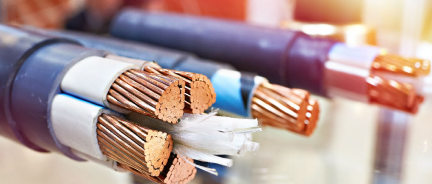
2 AWG and 4 AWG copper conductors are heavy-duty power cables used to carry high current in feeders and battery systems
Both 2 AWG and 4 AWG copper conductors serve the same applications. These are subpanel feeders, EV chargers, HVAC, solar/backup power, large appliances, and mobile power systems. The decision comes down to current demand, cable length, and tolerance for voltage drop. The general rule is to size up when in doubt. Upsizing reduces voltage drop and allows for future load growth.

Example: Detached Garage Workshop
Say you're running a feeder 80–100 feet to a garage with a 60A EV charger, power tools, a compressor, lighting, and a planned future welder. 4 AWG may be sufficient if loads stay stable and the voltage drop stays within limits.
2 AWG makes more sense if you anticipate upgrading the EV charger, running sustained high loads, or adding the welder. Therefore, upsizing now prevents the need for rewiring later.
Distance Guide
-
0–50 ft: 4 AWG
-
50–100 ft: either may work; load determines choice
-
100–150 ft: 2 AWG
-
150+ ft: upsizing to 2 AWG strongly recommended
At 170 feet, voltage drop calculators show that 4 AWG may exceed the recommended limit (~3%), while 2 AWG brings the drop into the acceptable range. Note that some tools calculate round-trip distance, while others use one-way calculations, and 120V vs 240V calculations differ, so there is no universal tool here.
When in doubt, manually calculate using conductor resistance per 1,000 ft.
For very long underground runs, aluminium conductors (e.g., 1/0 URD quadruplex) are worth considering for substantial material savings. Use Cu/Al-rated connectors at terminations and apply an anti-oxidant compound. The equipment grounding conductor doesn't need to match the feeder size; it's sized based on the overcurrent device rating per NEC tables.
Other Factors in Favour of 2 AWG
-
Continuous loads (3+ hours), like in EV charging or electric heating
-
Voltage-sensitive equipment like inverters or EV chargers
-
High ambient temperatures in attics or hot mechanical rooms
-
If you consider future expansion with more equipment
-
Trenching. When excavation is involved, labour exceeds conductor cost, so you need to upsize to avoid digging again
Note that 2 AWG requires larger conduit and termination hardware, and is harder to pull through tight bends.
Common Cable Types (available in both sizes)
2 AWG vs 4 AWG in Jumper Cables
Both 2 AWG and 4 AWG are very popular sizes for jumper cables, with different considerations. Engine starting demands a high current of 60–200A for a warm gasoline engine, and significantly more in cold weather when batteries produce less power and thicker oil increases resistance. Longer cables add resistance and reduce available current, making this problem even more obvious.
-
4 gauge works for compact cars, sedans, crossovers, mid-size SUVs, mild climates, and occasional use. It is lighter and easier to store.
-
2 gauge is better for trucks, large SUVs, vans, diesels, performance vehicles, cold-weather starting, cables 18–20 ft or longer, and anyone who frequently assists other drivers.
Both sizes will start a typical vehicle, but thicker cables maintain cranking power under demanding conditions. Many cheap cables fail not because of gauge but because of poor construction; thin copper inserts and weak clamps increase resistance regardless of the labelled gauge. So, choosing high-quality jumper cables is just as important as the gauge.
Look for 100% copper conductors (not copper-clad aluminium), heavy-duty clamps with strong spring pressure, cold-weather flexibility rated to at least −30°F/−34°C, a length of 18–20 ft, and durable insulation with strain relief.
Motorcycles and small powersports equipment use much lighter cables due to significantly lower starting current requirements, so they do not use 2 AWG or 4 AWG at all.
2 AWG vs 4 AWG in Battery Cables & 24V Inverter Systems
In low-voltage DC systems, even small voltage drops meaningfully affect performance.
-
4 gauge works for standard car audio, auxiliary batteries, mid-size inverters, RV/marine house battery systems, and vehicle accessories.
-
2 gauge is used for high-output alternators, large amplifiers, dual-battery/overland setups, winches, emergency vehicles, and solar inverter systems.
For a typical 2000W inverter on a 24V battery bank (~100A draw), 4 AWG operates close to its practical limits. 2 AWG is commonly recommended for battery interconnects, bus bars, and inverter feeds to reduce voltage drop and prevent heat buildup
General rule: 1000W → smaller conductors may suffice; 2000W → 2 AWG; 3000W+ → larger conductors required. Cable sizing doesn't change when starting with fewer batteries in a system designed for expansion. Even though the runtime decreases proportionally, the wire stays the same.