Garrie AI: Your Cable Guide


Is MC Cable Good For Exposed Basement Ceilings?
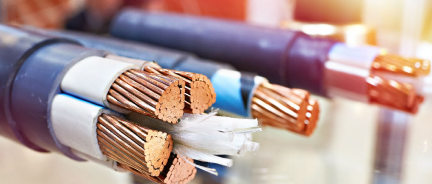
Yes, MC Cable is a good cable for exposed basement ceilings. Metal armor gives excellent mechanical protection compared to a standard NM-B non-metallic sheathed Romex cable. MC Cable in itself is also a reliable grounding path. MC is specifically designed for exposed installations in areas like this. If the basement is damp or moist, make sure that MC cable has a moisture-resistant PVC jacket.
Two cases when MC is not appropriate is when there is standing water in the basement (THWN-2 Conductors in PVC Schedule 80 Conduit are used instead), or when the basement is exposed to high traffic with a high chance of physical damage (THWN-2 in EMT works for this one). You may also ditch MC Cable if you do not like the exposed metal armor look for aesthetic reasons.
MC Cables used in basements should have copper conductors. They perform better in more variable conditions.
What does the National Electric Code Say?
NEC Article 330, which is dedicated entirely to metal-clad cables, states that MC cable is permitted in exposed (surface-mounted) installations indoors, including walls and ceilings. In residential settings, some of the most common applications of these cables include basements, garages, utility rooms, or other areas where a fully finished wall/ceiling is not required. The fact that the cable is protected by visible metal sheath is particularly useful for these types of applications.
For properly exposed runs, NEC (since its 2017 update) allows MC cable to be installed on the underside of joists or along surfaces, as long as it is secured correctly (supported at each joist or at specified intervals) and not subject to likely physical damage.
However, if the basement is more “damp” than “dry” — e.g., subject to moisture, condensation- it is important for the MC cable to have a protective PVC jacket on the top of its metal armour. You cannot simply use an MC cable with just a metal armour in these types of environments.
More importantly, MC must not be installed where it’s likely to be physically damaged , such as foot traffic, storage boxes leaning against it, or frequent contact with tools or equipment.
Some examples of the basements where MC cables should not be installed due to high risk of mechanical damage are:
- Low wall runs
- Walkways and traffic paths near utilities, laundry machines, etc.
- Storage areas
- Near equipment like washers, dryers, etc.
In some of these cases, you can use MC with protected sleeves, but running THHN THWN-2 in conduit is a more straightforward option.
A Case For Aesthetics
From a purely aesthetic/finish perspective: exposed MC isn’t very “hidden.” For this reason, some people prefer not to use it out of simply easthetic concerns. If you want a clean, finished ceiling, you may want to run cable inside conduit or behind drywall . Besides, using conduit is easier if future modifications are planned. However, if aesthetics does not concern you and installation in the basement is considered finished, MC cable remains an excellent choice, especially if it has a moisture-proof PVC jacket.
In the basement, the fact that MC Cable is visible is actually good, because it makes the cable easier to inspect.
Basement Wiring: Approach By Scenario

Here are the actual best-case scenarios for wiring in every type of basement:
1) DRY BASEMENT (unfinished, dry air)
Standard MC Cable
Standard MC with just the metal armor is suitable for exposed installations where the basement remains dry and the cable is not concealed. It is, in fact, the best cable for dry basements.
2) SLIGHTLY DAMP / HUMID BASEMENT (light moisture or condensation)
Jacketed MC (MC-W / MC-WL)
If the basement is slightly moist, the MC cable must be protected by a PVC jacket.
3) WET-PRONE BASEMENT (water intrusion or standing water)
THWN-2 Conductors in PVC Schedule 80 Conduit
This is for the cases when there is actual standing water. Both the THWN-2 conductors and PVC Schedule 80 conduit are rated for wet environments.
4) BASEMENTS EXPOSED TO HIGH TRAFFIC AND IMPACT (e.g., along low walls near walkways)
EMT Conduit with THWN-2
If there is high traffic in the basement, EMT Conduit with THWN-2 is best for mechanical protection. This conduit is rigid enough to sustain the damge, and keeps its shape no matter what.
Alternative: Standard or Jacketed MC with protective sleeves
5) BASEMENT TO BE FINISHED LATER
NM-B behind drywall (where permitted)
NM-B is approved for dry, interior locations and is commonly used once walls and ceilings are finished, since the cable is no longer exposed to physical damage. This is the easiest, cleanest choice for any house interior, including the finished basement.
Alternative: MC behind drywall if you need a more durable cable, or a local code requires it.
(Key point: NM-B is not approved for damp or wet basements; it becomes acceptable only after the space is finished and considered a dry interior environment.) If the basement is wet or damp, use an MC protected by a PVC jacket.)
6) EXPOSED CEILING WITH CLEAN AESTHETIC (visible runs)
EMT Conduit with THWN-2
If aesthetics is a concern in your basement, and you cannot use MC because of how it looks, EMT Conduit with THWN-2 is great for a professional, sleek look. Plus, you can easily replace or add conductors with it.
Nassau National Cable offers a range of MC cables appropriate for exposed basement ceilings and basements in general, including a standard and lightweight variety.