Garrie AI: Your Cable Guide


Explaining NEC Article 400 on Flexible Cords and Cables
Article 400 of the National Electric Code focuses on the use of flexible cords and cables in electrical installations.
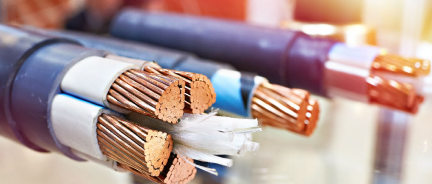
Flexible cords and cables are portable wiring assemblies made of stranded conductors with durable, flexible insulation, used to supply power to movable or temporary equipment where fixed wiring isn't suitable. While these cables are flexible and designed to move easily with the equipment, they are also easily damaged and prone to overheating. For this reason, their use is subject to strict limitations as indicated in NEC 400. The article explains where they can and cannot be used.
Flexible cords and cables:
-
Are used only in applications permitted in this article.
-
Do not substitute for fixed building wiring.
-
Must comply with UL 62 (Flexible Cords and Cables) and UL 817 (Cord Sets and Power-Supply Cords).
-
Factory-installed power cords (e.g., the ones that are a part of your vacuum cleaner) are still subject to Article 400.
NEC Article 400 covers:
-
Construction and identification of cords and cables
-
Permitted and prohibited uses
-
Ampacity ratings
-
Protection from physical damage
-
Securing and supporting
-
Connection methods
It does not apply to extension cords used in household settings unless those cords are used in a manner requiring code compliance, such as in commercial environments.
NEC Table 400.4: Types of Flexible Cords and Cables
|
Cord Type |
Voltage |
What the Letters Mean |
Construction |
Common Uses |
|
SOOW |
600V |
S = Service, OO = Oil-resistant insulation & jacket, W = Weather resistant |
Thermoset rubber, extra-hard usage |
Heavy-duty portable equipment, construction sites, industrial lighting, portable generators |
|
SJOOW |
300V |
SJ = Junior Service, OO = Oil-resistant insulation & jacket, W = Weather resistant |
Lighter-duty thermoset |
Light-duty power tools, portable lamps, shop vacs, small motors |
|
STOW |
600V |
S = Service, T = Thermoplastic, O = Oil resistant, W = Weather resistant |
Thermoplastic, flexible |
Medium-duty machinery, portable compressors, light construction equipment |
|
SJTOW |
300V |
SJ = Junior, T = Thermoplastic, O = Oil resistant, W = Weather resistant |
Light-duty thermoplastic |
Office equipment, consumer appliances, power strips |
|
SEOOW |
600V |
SE = Thermoplastic elastomer, OO = Oil resistant, W = Weather resistant |
TPE jacket, cold-flexible |
Cold storage facilities, refrigeration units, outdoor industrial applications |
|
SJEOOW |
300V |
SJ = Junior, E = TPE, OO = Oil resistant, W = Weather resistant |
Light-duty TPE |
Indoor/outdoor portable lights, temporary wiring in damp locations, extension cords in cold weather |
|
SPT-2 |
300V |
SP = Parallel cord, T = Thermoplastic, 2 = 0.824 mm² min conductor |
Flat PVC |
Household lamps, small electronic devices, chargers |
|
Type W |
2000V |
W = Extra-hard usage, mining-grade |
Heavy-duty thermoset |
Mining equipment, industrial motors, stage lighting, large portable generators |
Permitted Uses (400.7 & 400.10)
According to Section 400.10, flexible cords and cables are allowed in portable applications where flexibility is a must, such as:
-
Pendants or wiring of fixtures ( SJOOW, SJEOOW)
-
Connection of portable lamps or appliances
-
Wiring of portable signs
-
Elevator cables
-
Cranes, hoists and moving parts of equipment
-
Motor connections (if flexible connection is needed)
-
Temporary wiring for events, construction, and maintenance.
-
Connections where flexibility is essential after installation
Flexible cords must be visible and must not be concealed within walls, floors, or ceilings.
Flexible cords can only be used where flexibility is functionally necessary.
Note that most of these applications require the use of an attachment plug. Hardwired connections are only allowed if the equipment is specifically listed for flexible cord connection and the cord is properly secured with strain relief to prevent tension at the terminals.
Prohibited Uses (400.12)
Flexible cords must not be used:
-
As a substitute for permanent wiring
-
Through holes in walls, ceilings, or floors
-
Concealed behind drywall, flooring, or ceilings
-
Attached to building surfaces (unless listed and supported)
-
Through windows or doors
-
In places where they’re subject to physical damage, unless rated for such use.
Note: You cannot run a flexible cord through a wall for a clean look; it is a direct NEC violation.
Per 400.14, cords may be installed in aboveground exposed raceways if:
-
The facility is industrial and maintained by qualified personnel
-
The cord is no longer than 50 feet
-
The raceway is used to protect against physical damage
Ampacity must be derated using Table 400.5(A)(3) and further reduced by 0.8, or calculated under 310.14(B).
Ampacity Ratings (400.5)
Flexible cords have lower ampacity than regular wiring because:
-
They’re more compact and insulated
-
They’re exposed to bending, coiling, and movement
-
Their thicker jackets and multiple conductors reduce heat dissipation
Maximum Allowable Ampacity (Open Air, Table 400.5(A)(1))
|
AWG |
3 Conductors |
2 Conductors |
|
18 AWG |
7A |
10A |
|
16 AWG |
10A |
13A |
|
14 AWG |
15A |
18A |
|
12 AWG |
20A |
25A |
|
10 AWG |
25A |
30A |
|
8 AWG |
35A |
40A |
Installation Guidelines
Flexible cords and cables must be installed in a way that prevents mechanical damage, electrical stress, and conductor misidentification. The following guidelines apply:
-
Strain relief must be used at all entry and exit points. Cords must be secured using listed cord connectors or strain-relief fittings wherever they enter or leave enclosures or outlet boxes.
-
Cords must be protected from mechanical and environmental hazards. Installers should ensure that cords are not exposed to sharp edges, oil, moisture, chemicals, or physical damage. Avoid tight bends, kinks, or pinching that may degrade the insulation or jacket over time.
-
Proper support is required, especially near termination points.
-
Conductor identification must be clear and code-compliant. The neutral conductor must be distinguishable through white, grey, or light blue insulation; white or grey braid or tracer; or, for flat cords, a ridge or continuous white stripe along the jacket. The equipment grounding conductor must be solid green or green with yellow stripes. According to NEC 250.119, green or green/yellow conductors may not be used as hot or neutral conductors.
-
Only water-resistant cords may be used in wet locations. Cords such as SOOW or SEOOW must be selected, as they feature jackets and insulation rated for moisture exposure. All terminations in wet locations must be fully enclosed or sealed to prevent water intrusion.
-
Hazardous locations require specialized cords and fittings. In environments governed by NEC Articles 500–504, such as refineries, grain silos, or paint booths, only components listed for the applicable Class and Division may be used. Examples include explosion-proof cord grips with sealing rings, TC-ER-HL or MC-HL cables rated for Class I, II, or III locations, or SOOW cords paired with listed explosion-proof fittings (if specifically permitted by the AHJ).

2017 NEC Clarification: No Exemption for Power Supply Cords
There was once confusion over whether power cords that come pre-attached to appliances (such as vacuum cleaners) had to comply with NEC 400. The 2017 NEC update cleared that up:
If the cord type is listed in Table 400.4, it must comply with Article 400, regardless of its installation location, even if it’s part of a factory-assembled device.
That means cords like SPT-2 still must:
-
Be used only where permitted (400.10)
-
Not be run through walls, ceilings, or doors (400.12)
Nassau National Cable offers a wide range of flexible cords and cables, including SOOW, SEOOW, SJOOW, SJEOOW, STOW, SVT, SJTOW, Type W, and other portable power and control cables suitable for NEC Article 400 applications.