Garrie AI: Your Cable Guide

How Utility-Scale Solar Projects Source Electrical Infrastructure Materials
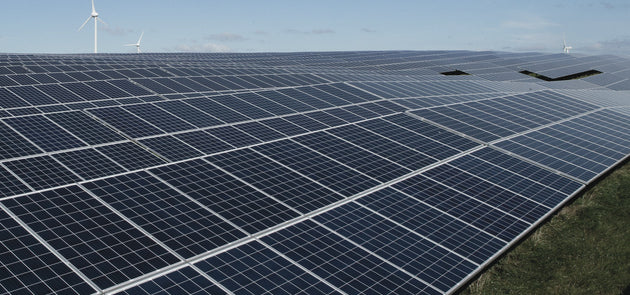
A 40 GWdc build-out year in utility-scale solar projects doesn't happen without wire and cable. Here's why medium-voltage cable procurement has become one of the most consequential and commonly underestimated decisions in utility-scale solar development, using a real case by Nassau National Cable.
First, here are some statistics on utility-scale solar projects in the United States to demonstrate the actual scale of it all:
-
40.5 GW .S. utility-scale solar was installed in 2024, which marked a top annual record (SEIA / Wood Mackenzie, Q4 2024 ↗)
-
195 GW is Wood Mackenzie's forecast for new U.S. utility-scale solar capacity coming online between 2024 and 2029(SEIA / Wood Mackenzie, Q4 2024 ↗)
-
$3.04B is a projected global solar cable market value by 2030 (9.84% CAGR) (360iResearch Solar Cable Market Report ↗)
The U.S. solar industry is in the middle of its most sustained construction wave ever. 40.5 GWdc of utility-scale solar came online in 2024, with forecasters projecting at least 43 GWdc annually from 2025 onward. All of this leads to an increased demand for wire and cable and potential schedule-critical supply chain issues.
EPC contractors know this firsthand. According to SEIA's Q3 2024 market report, projects are still being delayed into subsequent years due to lengthening lead times for critical electrical equipment. The same dynamic that plagued transformers and high-voltage breakers (with lead times stretching to 115–160 weeks) applies to medium-voltage cable for underground collector systems, even though there are fewer conversations about this.
Why Electrical Infrastructure Procurement Is Different
Solar module procurement gets the headlines of industry researchers. But for an EPC contractor executing a utility-scale ground-mount build, the cable connecting distributed arrays to the substation is just as consequential, and significantly less flexible once specs are locked with the supplier.
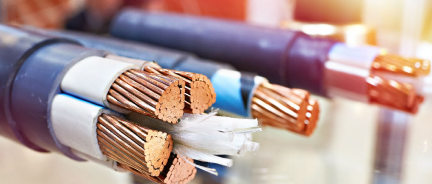
Medium-voltage underground cable, such as 35 kV URD constructions used in collector systems, is capacity-constrained at the manufacturer level. Production runs are long regardless of voltage and construction because these cables are not really sitting on the shelf, and late procurement translates directly into delayed trenching, stalled terminations, and pushed commissioning dates. Unlike modules, you can't easily substitute a different MV cable mid-project without triggering reapprovals and compatibility reviews.
"Procurement lead times can stretch four months overnight, trickling down to affect project interconnect schedules, delaying the start of energy production, and cascading down to erode margins and other financial targets." — pv magazine USA, Jan 2024
EPC contractors across the Northeast and Southwest have flagged lead-time fluctuations as the primary procurement risk, ahead of raw product unavailability. It is way too common to plan a build around a 10-week delivery window that silently extends to 18 weeks. And just like that, you can miss the code date and run into additional costs.
What Utility-Scale Builds Actually Require
A single utility-scale solar project may cover hundreds of acres across multiple field segments, each requiring underground cable routing back to a central collector substation. This scope is extremely large, and it compounds quickly.
A 100 MW project typically involves multiple voltage levels: 35 kV URD cable for the underground collector system, feeder runs to the point of interconnection, and low-voltage conductors within combiner boxes and inverter pads. The collector system cable accounts for some of the highest footage requirements on the entire project.
Total cable requirements at this scale are measured in hundreds of thousands of feet. Delivery must align not just with a project start date, but with the actual sequencing of civil work because cables arriving before trenches are dug create storage and double-handling problems. At the same time, delays stall crews and idle equipment. You cannot just store the cable at the site before it is actually used, because there are space constraints and a risk of physical damage from the weather. All of that adds up to the total cost of the project, so the cable has to arrive just in time.
The Procurement Timeline Problem
Many EPC teams treat cable as a standard-lead commodity, procuring it on the same timeline as structural balance-of-plant components. For low-voltage conductors, that's often fine. For 35 kV medium-voltage cable at project scale, it isn't.
Manufacturer capacity for medium-voltage cable is not elastic. Production slots are finite, and demand across the solar sector is high and concentrated. Projects don't start year-round on a rolling basis; they cluster by season and interconnection queue. An EPC that waits until detailed engineering is complete to begin cable procurement may find itself competing for the same production windows as dozens of other projects with similar timelines, especially given that the projects are seasonal.
So, what do you do with all that?
-
Treat MV cable as a long-lead item from day one
Confirm manufacturer capacity and secure production slots during early engineering, not after you lock specifications. Treat it with the same urgency as transformers or switchgear because it is just as important after all.
-
Plan volume by field segment
Phased delivery aligned with trenching progress reduces site congestion and prevents material from sitting in temporary storage between segments. Total volume matters less than sequencing even though it might sound like a more tangible metric.
-
Lock specs before procurement begins
Substitutions mid-project are expensive and time-consuming. Confirm conductor size, insulation construction, and jacket rating before placing an order so that you don't go through multiple reapprovals.
-
Coordinate delivery with civil work
Construction schedules are expected to slip. So, able delivery tied to actual trenching progress rather than a fixed project calendar keeps crews moving and helps avoid the chaos of materials arriving when no one's ready for them.
35 kV URD Collector System Supply For Utility-Scale Solar in Utah
Here is an actual successful case we worked on to illustrate our points
-
EPC Contractor:WSP Global
-
Cable Type: 35 kV URD 4/0 Aluminum
-
Total Supplied: 218,000 feet
-
Application: Underground collector system
WSP Global required underground medium-voltage cable for a utility-scale solar project in Utah, specifically 35 kV URD aluminium cable for the secondary distribution collector system connecting arrays to the central substation. With over 200,000 feet of cable needed across distributed field segments, late procurement was not an option.
Nassau National Cable structured supply around the project's actual build sequence rather than a fixed shipment schedule. Manufacturer capacity was confirmed and production slots secured early, ahead of peak demand cycles when other solar projects would request the same cable. Delivery batches were aligned with the collector system layout and installation priorities. As a result, cable was delivered to field crews when segments were ready. The team avoided site storage and double-handling between civil and electrical work. Everything went smooth without last-minute substitutions and reapproval processes.
Here is the result:
-
Installation schedule maintained without supply-driven disruption
-
Medium-voltage infrastructure delivered in line with construction phases
-
Collector system was completed without substitutions or rework
-
Electrical crews able to proceed continuously without waiting for material
The Hidden Bottleneck in Solar Builds
The industry conversation around solar supply chain constraints focuses heavily on modules and inverters. Medium-voltage cable rarely makes the list of concerns, which is part of why it causes schedule problems when it does. At Nassau National Cable, we know this firsthand.
Underground collector systems sit on the critical path between solar generation and grid interconnection. Without them, a project cannot energise. Yet because cable doesn't have the public profile of a 1,500-ton transformer or a constrained inverter supply chain, procurement decisions get made later and with less urgency than required by the lead times.
The solar cable market itself reflects the underlying demand pressure. Valued at $1.73 billion in 2024 and growing at nearly 10% annually, the market is expanding in line with solar deployment, meaning manufacturer capacity is under continuous demand rather than building ahead of it.
Medium-voltage infrastructure is not just available inventory. It's a production-scheduled commodity that requires early positioning before the construction window opens.
What EPC Contractors Should Expect from a Cable Supplier
At the project scale, the cable supplier relationship goes beyond fulfilling a purchase order. EPC contractors working on utility-scale builds benefit most from partners who understand how large energy projects are actually constructed, and who can align supply to match.
They are looking for early availability validation and volume planning that reflect the phasing and segment sequencing outlined above. Delivery coordinators should monitor field progress so crews receive materials when they're ready.
The U.S. solar industry is on track to install somewhere between 27 and 43 GWdc of new capacity every year through the end of this decade. That's a sustained, high-volume build environment, and one where electrical infrastructure procurement mistakes compound quickly across dozens of concurrent projects.
Getting cable right starts earlier than most project teams expect. The EPC contractors who treat medium-voltage supply as a schedule-critical item from the outset are the ones who finish on time.
Working on a utility-scale solar or infrastructure project?
At Nassau National Cable, we supply medium-voltage and low-voltage cable for EPC contractors and developers, with our supply structured around how large energy projects are actually built. Get in touch with us, and we can act as both first-line and second-line suppliers for your solar project.
Cables we have access to include medium-voltage solar power cables, copper photovoltaic PV cables, and underground power cables like URD.