Garrie AI: Your Cable Guide


A Guide to Electrical Wiring in the Attic
Attic wiring must account for extreme summer heat, exposed joists that cables can step on or damage, limited access, and special routing and protection rules near attic entrances and storage areas. This guide covers the best wiring methods for attics and the key NEC requirements for cable protection, support, splices, and installation.

What Makes Attic Wiring Different
A bedroom typically stays around 70°F year-round, while attic temperatures can rise significantly with outdoor heat and sun exposure. In summer, a vented attic in Ohio can remain at 120–130°F for several hours a day. In Phoenix or Houston, an unvented attic can reach temperatures above 150°F. That matters because NEC 310.15(B)(1) requires you to derate cable ampacity based on ambient temperature. No other space in the house usually requires it; it is reserved for outdoor wiring. In an interior wall, the ambient is always 30°C, and derating is not a factor.
Cable path and physical protection
In a wall, NM-B runs vertically through stud bays, protected by drywall on both sides. Wiring in the attic runs horizontally across joists, exposed to whatever moves through the space, including people and rodents.
Junction box accessibility
In an attic, junction boxes can easily disappear under loose-fill insulation. This type of insulation, usually cellulose or fibreglass, is blown across the attic floor with a machine, quickly covering a large area and filling gaps between and over the joists. If a junction box is mounted at joist height, it may end up buried under several inches of insulation. NEC 314.29 requires boxes to remain accessible for inspection and repairs, so they should be positioned where the insulation will not hide them.
Recessed light housings and top plate crossings
An attic is the space beneath the ceiling. Any recessed light in that ceiling has its housing sitting in the attic, and that housing has thermal rules that no wall fixture has. Every cable that drops from the attic into a wall passes through the top plate, and that penetration poses a physical damage risk that a wall run does not.
Which Cable to Pull for Electrical Wiring in Attic
Start with the attic itself. Is it dry with scuttle access only, damp or wet, or a walk-up shared with foot traffic or HVAC?
Dry attic with scuttle access → NM-B (Romex). For standard residential attic electrical wiring with ambient temperatures below 122°F, pull NM-B-rated 90 °C cable. It is a top choice in dry attic spaces, cheap, and easy to pull. The 90°C insulation rating is what allows it to withstand summer attic temperatures once you apply derating. Use 14/2 for 15A lighting circuits and 12/2 for 20A. Always include a ground conductor.
Damp or wet attic → UF-B or THWN-2. If factors affecting your attic include coastal humidity, a history of roof leaks, and a risk of condensation, NM-B can no longer be used, as it is not rated for damp or wet locations. For most damp attics (occasional condensation, mild coastal humidity, a past leak that has been repaired), UF-B is enough. It is rated for damp locations and direct burial, pulls like NM-B, and installs on the same staples and boxes. Step up to THWN-2 conductors in EMT conduit when the attic is actively wet (unrepaired leak, standing condensation, ongoing intrusion) or when rodent activity is a known problem. EMT adds cost and labour but provides the strongest protection against moisture, abrasion, and rodents in a single installation.
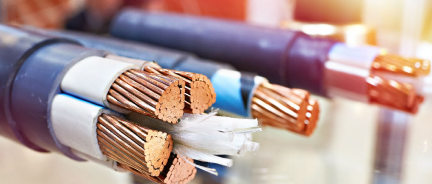
Walk-up or shared attic → MC cable or EMT. A walk-up attic with fixed stairs and regular foot traffic puts too much strain on the cable to use NM-B. So is an attic shared with HVAC equipment. For these, run MC cable (metal-clad armor) or pull THHN/THWN-2 through EMT. NEC 320.23 already requires guard strips or bored holes for NM-B within 6 feet of any attic access, and a walk-up attic effectively extends that protection zone across the entire floor.
Extreme heat exception. Sustained temps above 140°F (Southwest, Southeast, and unvented attics anywhere else) put you outside NM-B territory, regardless of whether the attic is dry. Use THHN/THWN-2 in EMT. The conductors are rated 90°C dry, and the conduit shields them from ambient heat, rodents, and dropped tools.
How hot attics cut your usable amps
NEC 310.15(B)(1) sets the reference at 30°C (86°F). Above that, you multiply the cable's 90°C ampacity by a correction factor.
Attic temperature: 86–104°F
14 AWG (15A circuit): 22.8A available — safe
12 AWG (20A circuit): 27.3A available — safe
Attic temperature: 113–122°F
14 AWG (15A circuit): 20.5A available — safe
12 AWG (20A circuit): 24.6A available — safe
Attic temperature: 122–140°F
14 AWG (15A circuit): 17.8A available — go to 12 AWG
12 AWG (20A circuit): 21.3A available — safe
Cable path: attic wiring code NEC 320.23
In an attic accessed by a scuttle hole only, within 6 feet of the scuttle, cable must pass through bored holes in the joists or lie between guard strips at least as tall as the cable. Past the 6-foot mark, cable can lie directly on top of the joists. In an attic with permanent stairs or a fixed ladder, the protection extends across the entire attic, not just the first 6 feet. If the space is walkable, treat the entire floor as walkable.
Bored holes must be at the center of the joist depth, at least 1¼ inches from either edge. If the hole edge falls closer than 1¼ inches to the joist face, add a 1/16-inch steel nail plate to protect the cable from future screws and nails. A ⅞-inch bit handles two runs of 12/2 NM-B.
Staple NM cable within 12 inches of every box and every 4½ feet along the run. Do not overdrive the staples. A crushed jacket is a failed inspection.
Neat attic wiring: routing and appearance
Neat attic wiring is not vanity. Cable that runs in straight lines along joists, staples on the same face every time, and boxes squared to framing is cable that stays out of the way of future work and reads clearly during a service call. A few habits do most of the work: pull all runs on the same side of the joist so a plumber or HVAC tech knows where to expect them, keep every bend gradual (NEC requires a minimum bend radius of 5× the cable diameter for NM-B), and label junction boxes with the circuit number in permanent marker on the cover. When multiple cables run parallel, keep them stacked or spaced consistently rather than crossed. Neat runs also simplify derating, since bundled cables in contact for more than 24 inches require an additional ampacity adjustment under NEC 310.15(C)(1).
Junction boxes
The box has to stay accessible. There are 2 ways to guarantee it:
-
Mount the box on a joist face so the cover extends 2–3 inches above the joist top. Attach a plywood or metal extension collar that rises with the future insulation depth.
-
Mark the location with a visible tag stapled to a rafter so a future service call can find the box under insulation without probing.
Neither fix is required in a wall install. Boxes there stay accessible because drywall is not blown insulation.
Recessed lights
Non-IC (non-insulation-contact) housings require 3 inches of clearance from insulation on all sides and ½ inch from combustibles above. If insulation touches a non-IC can, the thermal cutoff trips repeatedly and eventually fails, and the housing scorches surrounding wood.
IC-AT (insulation contact, airtight) housings are rated to sit directly in insulation and to meet the airtight requirement most state energy codes now enforce. In any attic that will be insulated to modern R-values, IC-AT is the only correct choice. Non-IC is legal only if the attic will be kept clear around every can, which almost never happens in practice.
Attic fan wiring
An attic fan is either powered (a motor mounted on the roof pushing hot air out through a gable or roof vent) or passive (a solar vent that does not require power). The wiring guide below covers powered fans.
Most attic fans draw 2–4 amps and run on a dedicated 15A circuit fed by 14/2 NM-B. The fan itself lands on a thermostat, a humidistat, or both. A typical attic fan wiring diagram runs hot from the panel to the thermostat's line terminal, then out the load terminal to the fan's black lead. Neutral pigtails from the panel run direct to the fan's white lead. Ground bonds to the fan housing and to every metal box along the way.
Three details that fail inspections:
-
The thermostat must sit in a location that senses the actual attic ambient, not the temperature near a soffit vent where the reading runs 20 degrees cool.
-
The fan disconnect must be within sight of the motor per NEC 430.102(B). A pull-chain switch on the fan itself meets this requirement. A breaker in the panel does not.
-
The circuit must be GFCI-protected if the fan is within 6 feet of any attic plumbing or if the attic is classified as damp.
For a fan with a humidistat, the humidistat wires in series with the thermostat: both must call for run before the fan energizes. This prevents the fan from running in cool but humid conditions, which draws warm, humid outdoor air into the attic and defeats the purpose.
Before you close up
-
Every splice inside a box, every box covered
-
Cable protected within 6 feet of the scuttle
-
Nail plate on any cable within 1¼ inches of a top plate edge (NEC 300.4(A))
-
No staples overdriven, no jackets pinched
-
Continuity and polarity checked with the breaker off
Nassau National Cable stocks all four cable types for attic: NM-B (Romex, UF-B, THHN/THWN-2 building wire, and MC cable.
Сables Featured In This Blog

- Sale price
- $0.57
- Regular price
- $0.57

- Sale price
- $0.84
- Regular price
- $0.84

- Sale price
- $0.71
- Regular price
- $0.71
- Sale price
- $1.06
- Regular price
- $1.06

- Sale price
- $0.33
- Regular price
- $0.33

- Sale price
- $1.01
- Regular price
- $1.01