Garrie AI: Your Cable Guide


How Much Does It Cost to Install a Dedicated 20 Amp Circuit in Your Garage?
Is it time to finally install that garage circuit? In this article, we detail the costs of installing a dedicated line in a garage for homeowners.

When To Install a Dedicated Garage Line?
-
Using power tools or workshop equipment regularly.
-
Installing high-consumption appliances like freezers and refrigerators inside the garage.
-
Setting up an electric vehicle (EV) charging station.
-
Frequent circuit overloads or breaker trips in the garage.
-
Converting the garage to a workspace, home office, or gym.
-
Pulling a renovation permit or converting the garage into a habitable space—may trigger code requirements for dedicated circuits.
-
Improving garage safety and reliability with dedicated circuits.
-
Preparing for a home sale—an inspection may flag shared or outdated garage circuits as non-compliant.
The installation is not worth it if:
-
The garage is only used for occasional tasks like turning on a single bulb or charging small devices.
-
Existing circuits are stable, with no signs of overload or tripping.
What Should The Ampacity of a Dedicated Circuit To A Garage Be?
A 20-amp circuit is usually recommended for garages because:
-
You can use all power tools and equipment without overload.
-
You can scale for future power needs (e.g., EV charging, freezers).
-
20-amp circuit meets or exceeds most local electrical codes for garages.
While a 15-amp circuit might work for basic lighting or occasional tool use, it's usually not worth the effort to install one as a dedicated line. If you're going through the process of adding a new circuit, 20 amps gives you far more reliability and higher long-term value with little to no additional cost.
Dedicated Circuit Cost In A Garage

The total cost to install a dedicated 15- or 20-amp circuit in a garage ranges from $400 to $800. Here is the breakout of all the factors involved:
Electrician Labor ($75–$125/hour)
-
Labor is a major part of the total cost.
-
A basic installation usually takes 2–4 hours.
Dedicated Circuit Installation ($150–$300 per circuit)
-
Covers installing a breaker, running wire to the garage, and connecting the outlet or equipment.
-
Price varies based on distance, wiring access, and wall type.
Outlet Installation (120V/240V) – $120–$200 per outlet
-
A standard 120V outlet typically costs $120–$150.
-
A 240V outlet—for EV chargers or larger tools—runs $150–$200+.
-
GFCI protection, if required, adds another $20–$50.
Materials (Wire, Breakers, Conduit) – $50–$150
-
Includes wire (e.g., NM-B, THHN), breakers, conduit, boxes, and fittings.
-
Cost depends on run length and wire type.
-
EMT (metal conduit) may be required for exposed indoor runs to prevent damage, especially in unfinished garages.
Permit & Inspection Fees – $50–$200
-
Required in most cities for any new electrical circuit.
-
Costs vary by location:
-
In major cities like LA: $65–$120 for the permit and $40–$100 for inspection.
Additional Garage Circuit Cost Factors
There are several additional factors that you should take into consideration when renovating a garage. Let's break them down:
Panel Upgrade ($500–$2,000)
-
Needed if your main panel is full or doesn’t have enough capacity.
-
Often the case in older homes with 100-amp service, which may need to be upgraded to 200 amps for the added load.
Garage Subpanel ($400–$1,500)
-
Makes sense if you're adding multiple circuits—for outlets, lighting, an EV charger, or HVAC.
-
Keeps wiring simpler and breakers easily accessible in the garage.
-
Good for future upgrades without returning to the main panel.
Conduit Installation ($3–$5/ft.)
-
Required for exposed wiring—common in garages with unfinished walls or surface-mounted runs.
-
Usually uses PVC or EMT conduit with THHN or THWN wires inside.
-
Protects the wires from damage and keeps the install code-compliant.
-
Also used outdoors or underground when running power to a detached garage.
Wall Repairs ($150–$500)
-
Needed if NM-B wire has to be fished through finished drywall or ceilings.
-
Covers drywall cutting, patching, repainting, and retexturing if needed.
-
More expensive if the walls are textured or detailed.
GFCI Outlet ($20–$50 each)
-
NEC Article 210.8(A)(2) is required in garages for all 15- and 20-amp, 125V receptacles.
-
One GFCI can protect multiple downstream outlets on the same circuit.
-
If your garage outlets aren’t GFCI-protected, it's time to upgrade because protection is required.
Underground Trenching ($5–$15/ft.)
-
Needed to bring power to a detached garage.
-
Involves digging, laying conduit with THWN or UF cable, and backfilling.
-
Price depends on trench length, soil type, and obstacles like roots or pavement.
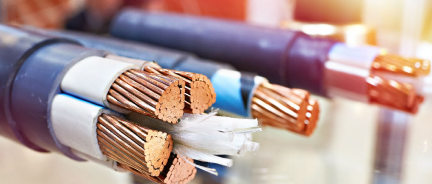
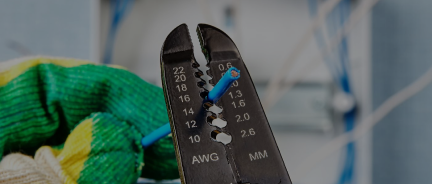
Most common types of cables in garage runs are NM-B, THHN, and UF-B. For wiring behind finished walls, 12/2 NM-B cable is used. In garages with exposed framing or concrete walls, 12 AWG THHN wire in EMT or PVC conduit is used. For underground runs to a detached garage, electricians install either 12 AWG THWN wire in conduit or 12/2 UF cable. All of these cables are available at exclusive prices at NNC.