Garrie AI: Your Cable Guide



5 kV vs 15 kV vs 35 kV MV Cable Selection Guide
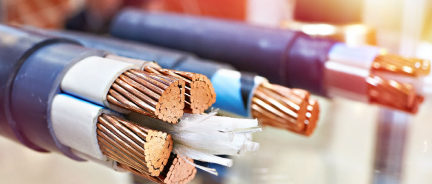
Choosing the right medium voltage cable starts with the system voltage. Each cable class serves a different voltage range, with differences in insulation thickness, physical size, and applications.
This guide compares 5 kV, 15 kV, 25 kV, and 35 kV cables to help you select the right option for your electrical system.
MV Cable Voltage Classes Explained
A cable's voltage rating is not necessarily the same as the system's operating voltage. System voltage refers to the nominal phase-to-phase voltage, while cable rating identifies the voltage category for which the cable is designed.
For example, a 4.16 kV system typically uses 5 kV cable, a 13.8 kV system uses 15 kV cable, and a 34.5 kV system uses 35 kV cable.
The table below shows how standard cable ratings correspond to common system voltages and applications.

Matching System Voltage to Cable Class
Start with the system's nominal phase-to-phase voltage and choose the lowest standard cable rating that meets or exceeds it.
For example, a 13.8 kV system requires at least 15 kV cable because the lower 5 kV and 8 kV ratings are insufficient. A higher-rated cable, such as 25 kV or 35 kV, may also work, but its thicker insulation generally makes it larger, heavier, and more expensive without providing a practical advantage.
|
System Voltage |
Cable Class |
Notes |
|
2.4 kV |
5 kV (or 2.4 kV non-shielded where NEC allows) |
Non-shielded limits covered below |
|
4.16 kV |
5 kV |
8 kV class when the system needs more insulation |
|
12.47 kV, 13.2 kV, 13.8 kV |
15 kV |
The most common industrial and campus class |
|
24.9 kV |
25 kV |
35 kV allowed where extra insulation is wanted |
|
26.4 kV |
28 kV or 35 kV |
Used by some urban utilities |
|
34.5 kV |
35 kV |
Utility service, renewables, large campuses |
The cable rating is only the first selection. You also need to choose an insulation level of 100%, 133%, or 173%, depending on the system's grounding arrangement and how long a ground fault can remain before it is cleared.
Insulation Levels: 100% vs 133% vs 173%
The required insulation level depends on the system's grounding arrangement and how quickly its protective equipment clears ground faults. Systems that take longer to clear faults need thicker cable insulation. During a phase-to-ground fault, the two healthy phases see more than their normal voltage to ground. Extra insulation protects them for as long as the fault lasts.
-
100% level: Ground faults clear within 1 minute. Common in utility distribution feeders serving residential neighbourhoods and industrial motor circuits with fast-acting protection.
-
133% level: Ground faults clear within 1 hour. Used in facilities such as paper mills and manufacturing plants where a ground fault may be tolerated briefly to avoid interrupting production.
-
173% level: Ground faults may persist for more than 1 hour. Used in specialized industrial systems, such as chemical processing plants, where equipment requires a controlled shutdown.
Okonite's engineering note gives the voltage to ground each class can carry at each level:
|
Cable Class |
100% level |
133% level |
173% level |
|
5 kV |
2.4 kV |
3.2 kV |
4.16 kV |
|
8 kV |
4.6 kV |
6.2 kV |
8.0 kV |
|
15 kV |
8.7 kV |
12 kV |
15 kV |
|
25 kV |
15 kV |
19 kV |
25 kV |
|
35 kV |
20 kV |
27 kV |
35 kV |
The same note says that many end users choose 133% by default as an added safety margin during installation, splicing, and termination. Data centers use high-resistance grounding to keep critical loads online through a first ground fault, so 133% cable is common on those feeders.
Shielded vs Non-Shielded MV Cable
The NEC generally requires shielded cable for installations operating above 2,400 V, including 4.16 kV systems. These requirements are covered in NEC Article 315, which also addresses shielding at joints and terminations.
Shielding controls the electric field around the conductor and provides a path for charging and ground-fault currents. Cable shields must be properly grounded and bonded according to the installation design.
Utilities operating outside NEC jurisdiction may still use non-shielded 5 kV cable in certain applications.
Minimum Conductor Sizes and Fault Withstand
The NEC sets minimum conductor sizes based on system voltage. Under NEC Table 315.12(A), higher voltage ranges generally require larger minimum conductors.
|
System Voltage |
Minimum Conductor Size |
|
2,001 V to 5,000 V |
8 AWG |
|
5,001 V to 8,000 V |
6 AWG |
|
8,001 V to 15,000 V |
2 AWG |
|
15,001 V to 28,000 V |
1 AWG |
|
28,001 V to 35,000 V |
1/0 AWG |
These are only minimum sizes. The actual conductor must also carry the expected load current and withstand short-circuit current until the protective device clears the fault.
25 kV vs 35 kV Medium Voltage Cable Applications
25 kV cable serves 24.9 kV utility distribution in underground residential and rural systems. Most 25 kV cable is concentric-neutral URD with TR-XLPE or EPR insulation and an LLDPE jacket, designed for direct burial or ducting. 25 kV is uncommon in industrial or commercial systems.
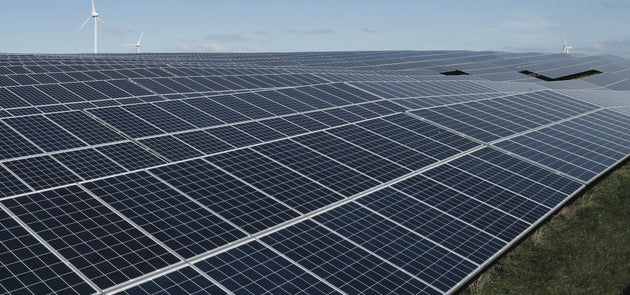
35 KV cable serves renewables. The American Clean Power Association notes that the most common wind and solar collection voltage is 34.5 kV.
Large AI and HPC data centre facilities use medium-voltage systems up to 34.5 kV to distribute power across campuses and supply server halls. Higher-voltage equipment, such as ABB's 34.5 kV HiPerGuard UPS, also provides backup power for critical computing loads without an additional voltage-conversion stage. 35 kV cables also serve large industrial campuses.
Voltage Classes in Data Center Power Systems
|
Segment |
Typical system voltage |
Cable class |
|
Utility service and campus loop, large AI campuses |
34.5 kV |
35 kV |
|
Utility service and distribution, smaller sites |
12.47 kV to 13.8 kV |
15 kV |
|
MV UPS lineups |
4.16 kV to 34.5 kV |
5 kV to 35 kV |
|
Feeders to 800 VDC rectifiers and power rooms |
13.8 kV |
15 kV |
|
Generator paralleling and large chillers |
4.16 kV or 13.8 kV |
5 kV or 15 kV |
Data centers often use 35 kV cable for campus-wide power distribution and 15 kV cable for distribution within buildings. For example, ABB's HiPerGuard UPS supports systems up to 34.5 kV, while NVIDIA's 800 VDC design uses 13.8 kV feeders.
FAQ
What is the difference between 5 kV, 15 kV, and 35 kV cable?
The main difference is the voltage each cable is designed to handle. A 5 kV cable is typically used on 2.4 kV and 4.16 kV systems, a 15 kV cable on 12.47–13.8 kV systems, and a 35 kV cable on 34.5 kV systems. Higher voltage ratings also require thicker insulation.
What cable do I need for a 34.5 kV system?
Use 35 kV class cable, rated for systems up to 35,000 V phase to phase. Choose the 100% level (345 mils) for solidly grounded systems or the 133% level (420 mils) where ground faults can last up to an hour. The NEC minimum conductor size is 1/0 AWG.
What is 25 kV cable used for?
25 kV cable serves 24.9 kV distribution systems, mostly underground residential and rural utility circuits. It typically comes as concentric neutral URD cable with TR-XLPE or EPR insulation.
Medium Voltage Cable From NNC, by Voltage Class
Nassau National Cable stocks 2.4 kV through 35 kV cable across four U.S. warehouse locations, backed by strategic factory stock allocations and direct relationships with Southwire, Prysmian, and Okonite. NNC cuts to length, builds custom reel configurations, matches parallel sets, and supplies pre-terminated assemblies with lugs installed. NNC works as a primary supplier or as a backup source when a critical-path feeder cannot wait.
Browse the full medium voltage power cable collection, the aluminum MV-90 and MV-105 collection or start with these by voltage class.
2.4 kV
5 kV and 8 kV
-
MV-105 or MV-90 XLP, PVC jacket, shielded, 100% or 133%, 5 kV
-
MV-105 with ground, EPR/PVC, copper tape shield, 5 kV / 8 kV
-
Prysmian Airguard MV-105, three-conductor EPR/PVC, 133%, 5 kV
-
Prysmian Airguard MV-105, three-conductor EPR/PVC, 100%, 8 kV
15 kV
-
Type UL MV-90 XLP, PVC jacket, single conductor, 133%, copper
-
Prysmian Airguard MV-105, three-conductor EPR/PVC, 133%, copper
-
Prysmian Airguard MV-105, three-conductor EPR/PVC, 133%, aluminum
25 kV
-
Prysmian Airguard MV-105, three-conductor EPR/PVC, 133%, 25 kV
-
Type UL MV-105 EPR, PVC jacket, single conductor, copper, 25 kV / 35 kV
35 kV
-
Type UL MV-105 EPR, PVC jacket, single conductor, copper, 25 kV / 35 kV
-
Prysmian Airguard MV-105, three-conductor EPR/PVC, 133%, 35 kV
Call 516-482-6313 or request a quote for your next medium voltage feeder.