Garrie AI: Your Cable Guide


Wire and Cable Trends Through 2030: What's Driving Demand
The wire and cable industry is in the midst of a significant demand shift that is restructuring the market. The market is moving from routine construction and replacement demand into a capacity-constrained electrification cycle. Buyers are already feeling the change: lead times are longer, certain gauges and specialty constructions are harder to source, and quote windows have shortened as copper, aluminum, and production capacity come under pressure. This is not a temporary supply problem. It is the result of several large demand sources arriving at once, including grid modernisation, renewable energy, EV charging, data centres, industrial electrification, and infrastructure hardening. The market has not yet adapted to the massive demand of these developing market segments.
Here is what the data says about where the industry is headed through 2030, and what it means for anyone who buys or deals with wire and cable for a living.
The Market in Numbers
The global wire and cable market is on track to reach roughly $245 billion by 2026, growing at close to 6 percent a year, according to Mordor Intelligence. In the United States alone, the market is projected to reach $44.5 billion by 2030, up from $31.9 billion in 2024, according to Grand View Research. North America as a whole moves from $37.7 billion in 2025 to $47.9 billion by 2030.
Those are healthy numbers for a mature industry, but the aggregate figure reveals additional context: growth is not even. Some traditional segments are barely keeping pace with inflation, while the six segments that we discuss in this article are growing at speeds up to 20 percent a year. These segments are reshaping the industry as we speak, from lead times to the allocation of domestic manufacturing capacity.

Six Forces Driving Demand
1. EV Charging Infrastructure
Electric vehicle adoption is the most visible growth driver, and the charging infrastructure buildout behind it is reshaping demand for an entire category of cable. The U.S. currently has roughly 4 million EV charging connectors. Projections put that number near 35 million by 2030, an eightfold increase in five years. The federal NEVI Formula Program and similar state-level initiatives are a large part of what makes that number credible rather than aspirational, since they tie funding directly to deployment targets rather than leaving the buildout to market timing alone.
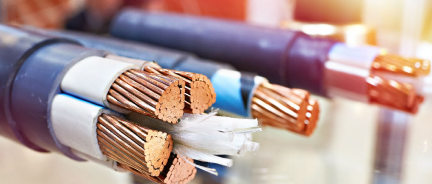
That buildout depends on cable types that did not have meaningful volume a decade ago: high-temperature-rated charging cable, silicone-jacketed flexible cords for connector assemblies, and direct burial cable for underground runs between charging stations and panels. Estimates for the EV charging cable segment vary by research firm, ranging from roughly 13 to 18 per cent CAGR through 2030, according to MarketsandMarkets and IMARC Group, while the broader EV charging infrastructure category, which includes stations and connectors alongside cables, is tracked by Grand View Research at over 25 per cent CAGR. Either way, this is the fastest-moving segment in the entire industry by a wide margin.
For installers and EPC contractors, this means qualifying new suppliers for cable types that were a small line item five years ago and now require dedicated planning. Lead times on EV-rated cable have already extended in some regions as charging network buildouts compete for the same limited supply.
The buildout is not limited to public charging networks, either. Fleet electrification at logistics depots, municipal bus yards, and corporate campuses is adding a second wave of demand for the same cable types, often even on faster timelines than utility-scale projects, because fleet operators are tied to vehicle delivery dates they cannot push back. A contractor bidding on a 50-truck depot conversion is competing for the same DLO and welding cable inventory as a public charging network installer, and both are competing with EV manufacturers themselves for raw copper. There is also a technical shift underway inside the cable itself. As DC fast charging pushes toward higher power levels, manufacturers are moving to liquid-cooled charging cables to keep conductor size manageable at the connector end, a construction that barely existed in commercial volume three years ago and now represents one of the fastest-growing sub-segments within EV cable.
2. Renewable Energy Buildout
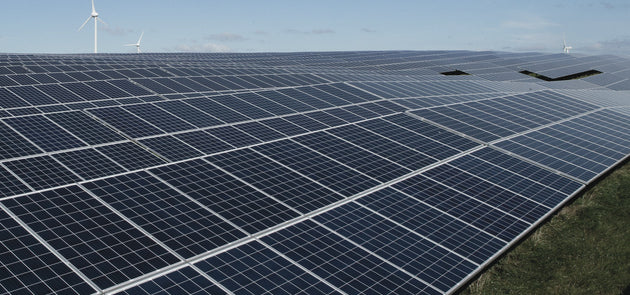
Renewables are projected to meet nearly half of global electricity demand by 2030, and each megawatt of solar or wind capacity requires a corresponding cable. Solar PV alone accounts for roughly 80 per cent of new global generation capacity additions, according to the International Energy Agency. The renewable energy cable market, covering everything from PV wire to inter-array cabling for offshore wind, is projected to exceed $5 billion by 2030.
This segment is unique because it pulls demand in two directions at once. Utility-scale solar and wind farms need massive volumes of standardized cable, typically purchased in bulk on a fixed construction schedule. Distributed and community solar projects need smaller, more varied cable runs delivered faster, on tighter timelines, often with shorter purchasing lead times because the developer is reacting to permitting and interconnection approvals rather than driving the schedule themselves. Distributors that can serve both ends of that spectrum, not just the large utility contracts, are positioned to capture more of this growth, and the ones that cannot are increasingly losing the smaller, faster-turnaround jobs to local suppliers even when they win the big utility bids.
Offshore wind adds a third dimension that most buyers do not deal with on land-based projects: submarine cable. The subsea interconnect cable used to carry power from offshore turbine arrays back to shore is growing at an 8.43 per cent CAGR, nearly as fast as the EV segment, per Custom Market Insights. These are highly specialised, high-value cable runs, and the manufacturing capacity for submarine cable is concentrated among a small number of producers globally, including Nexans, Prysmian, and NKT, which means lead times on these projects are set years in advance. That concentration has made submarine cable one of the clearest examples in the industry of demand outpacing manufacturing capacity, with several major offshore wind projects in Europe and the U.S. facing multi-year delays tied directly to cable production slots rather than turbine availability or permits. Ørsted, for instance, pushed back the final investment decision on part of its U.S. offshore wind portfolio into 2025 and 2026, citing installation vessel and cable supply constraints as a structural risk to the project timeline rather than a temporary bottleneck, according to industry reporting from Offshore Magazine. The same reporting notes that major cable manufacturers are now booking backlogs of more than a decade, with production capacity at top suppliers fully committed into the late 2020s.
3. Data Centers and AI Infrastructure
This is the force catching the most people off guard and the biggest disruptor of all. Global data center electricity demand is projected to hit 945 terawatt-hours by 2030, more than double the 415 terawatt-hours recorded in 2024, according to the IEA's Energy and AI report. The United States accounts for the largest share of that growth, with data centres on track to consume more electricity by 2030 than the country's aluminium, steel, cement, and chemical manufacturing combined. That demand does not arrive without cable. Hyperscale data centre campuses require enormous volumes of power distribution cable, fibre optic cable, and structured cabling, often on compressed construction timelines that do not tolerate supply delays.
The scale of individual projects has changed the buying behaviour of the entire segment. Hyperscale builders are now pre-purchasing cable reels 12 months ahead of construction to lock in supply, a practice that was rare five years ago. States with the heaviest data centre construction activity, including Virginia, Ohio, and Texas, are reporting fibre and copper demand at record levels, and that demand is pulling supply away from other regional projects.
For any business in other industries competing for cable supply in a data-centre-heavy region, this is the force most likely to show up as an unexpected lead-time extension on an unrelated order.
There is also a quieter shift happening inside the data centre cabling itself. As rack densities climb to support AI training clusters, power distribution within the data hall is moving toward higher-gauge, higher-current cable to handle the load, while connectivity is moving almost entirely to fiber for anything beyond short rack-to-rack runs. That combination means a single hyperscale campus now draws on two cable supply chains simultaneously, heavy-gauge copper for power and high-count fibre for data, and a shortage in either one can stall a build that is otherwise on schedule. The IEA report also flags transmission infrastructure as a separate bottleneck from generation capacity, noting that up to 20 per cent of planned data centre projects could face delays if grid connection upgrades, which depend on the same high-voltage cable supply chain covered below, do not keep pace.
4. Grid Modernization
Ageing grid infrastructure was already a known problem before AI data centres and EV charging added new load to the system. Now it is an urgent one. The International Energy Agency projects global grid spending will reach $2 trillion annually, and in the U.S., the Department of Energy has allocated $20 billion specifically for Grid Resilience and Innovation Partnerships.
A meaningful share of that spending goes toward underground cable, which is growing at nearly 10 percent CAGR through 2033 as utilities move distribution lines underground to reduce outage risk from storms and wildfires. High-voltage cable, used for transmission upgrades to carry new renewable and data centre loads, is growing at a 6.8 per cent CAGR, a healthy clip for a segment that historically moved much more slowly. Most of this transmission work falls into two distinct buckets that buyers should not treat as interchangeable: new-build transmission lines connecting renewable generation and data centres to the existing grid, and retrofit work replacing ageing conductor on circuits that are decades past their original design life. The second category is less visible in headlines but represents a larger and steadier share of utility spending, since most grid operators are managing infrastructure that predates current load forecasts by 30 years or more.
The practical effect for buyers is that grid work competes directly with EV and data centre demand for the same high-voltage, underground cable production capacity, since all three draw on similar conductor sizes and insulation systems. A utility replacing ageing feeder cable in a routine maintenance cycle is now sourcing from the same manufacturing lines as a hyperscale campus laying in new service, which means even non-emergency utility work can see lead times stretch during periods of high data centre or renewable construction activity in the same region.
5. Fiber Optic and 5G Rollout
Fiber has the strongest sustained growth rate of any major cable category, at 8.62 percent CAGR globally, according to Mordor Intelligence. The world consumes more than 900 million kilometres of fibre optic cable annually. That number keeps climbing as telecom carriers extend 5G backhaul networks and as data centres and enterprise customers replace copper with fibre for higher-bandwidth applications. The telecom and data centre segment is specifically growing at an 8.12 per cent CAGR through 2031.
This growth is not limited to developed markets. Countries across Southeast Asia have set aggressive fibre penetration targets for the back half of the decade, and international demand is adding to the pressure on global fibre supply chains that are already stretched by domestic data centre buildouts. Fibre demand also has a structural advantage that other segments do not: it serves two unrelated growth drivers, telecom infrastructure and data centre connectivity, at the same time. A glass and cabling shortage caused by a hyperscale buildout in one region can ripple into telecom carrier projects in a completely different part of the country, simply because both draw on the same fibre-draw and cabling production lines. That cross-sector demand overlap is one reason fibre lead times have proven harder to predict than copper lead times over the past two years, even though the underlying manufacturing process is in some ways less complex.
6. Sustainable Materials
The sixth force is less about volume and more about the material the cable is made of. Major manufacturers, including Nexans, have committed to sourcing 30 percent recycled copper content by 2030. Low-smoke, zero-halogen cable, commonly called LSZH, is shifting from a speciality product used mainly in transit and tunnel applications to a standard requirement in commercial and institutional construction, because it reduces fire spread by 5 to 10 times compared to standard PVC-jacketed cable.
This shift matters for buyers because it changes what "in stock" means. A distributor that stocked only standard PVC constructions five years ago may now need to carry LSZH and high-recycled-content alternatives to meet the specifications showing up in newer commercial and infrastructure projects. The pressure is coming from two directions at once. Building codes in fire-sensitive applications, including transit systems, healthcare facilities, and high-occupancy commercial buildings, are increasingly specifying LSZH outright rather than treating it as an upgrade option. Separately, corporate sustainability commitments from large data center and renewable energy developers are pushing recycled-content requirements into procurement specs for projects that previously cared only about price and lead time. A distributor that cannot document recycled content percentage or LSZH compliance is starting to lose bids on specification grounds before price ever enters the conversation, a newer dynamic most buyers are not used to in a historically commodity-driven market.
The Segments to Watch
Not every part of the wire and cable industry is moving at the same speed, and the gap between the fastest and slowest segments is widening. EV cable leads at more than 20 percent CAGR. Underground installation work follows at 9.9 percent, fiber optic cable at 8.62 percent, submarine cable at 8.43 percent, and high-voltage cable at a still-strong 6.8 percent. By comparison, broader construction and industrial cable is growing closer to 5.9 percent, roughly in line with the overall U.S. market.
Construction and industrial cable deserves a closer look because it is the baseline for the rest of the market. This category includes general building wire, standard THHN and XHHW, and cable pulled through conduit on ordinary commercial and residential jobs. It remains the industry’s largest segment by volume, and its growth is still healthy for a mature market.
The risk for buyers is not weak demand. It is that steady, standard cable demand may not be protected first when capacity tightens. When manufacturers have to prioritise production during a capacity crunch, the fastest-growing and highest-margin segments tend to move first. Standard building wire and general industrial cable may still be essential, but they can lose priority when plants are running at full capacity and large data center, EV, utility, or renewable energy orders are competing for the same copper rod, extrusion lines, and skilled labour.
Geography adds another layer. India’s wire and cable market is projected to grow at roughly 12 percent CAGR through 2028, well above the global average, driven by electrification and infrastructure investment. Growth at that scale in a major manufacturing and raw-materials market can affect global copper and aluminium supply, pricing, and lead times, even for buyers with no direct connection to India.
What This Means for Buyers
Three practical implications follow from these six forces, and they apply whether you are an electrical contractor, a utility procurement manager, or an industrial buyer.
Lead times are not going back to where they were. The forces above are structural, not cyclical. EV infrastructure, data centre construction, and grid modernisation are multi-year federal and private investment programs, not short-term demand spikes that will fade. Planning, purchasing further in advance, and qualifying more than one supplier per cable type is no longer just a best practice. It is becoming a requirement for staying on schedule.
Product mix is shifting faster than catalogs update. The fastest-growing segments, EV cable, fiber, and underground high-voltage, are precisely the categories most likely to face allocation constraints when demand outpaces manufacturing capacity. Buyers who specify these categories should confirm current stock and lead times before committing to a project timeline, rather than assuming availability based on past experience with more commoditized cable types.
Domestic and regional supply matters more than it used to. With international fibre and copper demand both climbing, and with major U.S. buildouts competing for the same global raw material supply, sourcing from a distributor with established domestic inventory reduces exposure to the kind of international shipping delays that hit some buyers hard in years past.

Where Nassau National Cable Fits
These six forces affect nearly every category Nassau National Cable carries, from building wire and MV cable for the grid modernization buildout, to direct burial and high-temp constructions for EV charging infrastructure, to the fiber and data center cabling powering the AI buildout. NNC stocks across these categories specifically because the industry has moved in this direction, and because the contractors, utilities, and industrial buyers who depend on us need a supplier built to keep pace with that demand.
That supply model rests on multi-manufacturer sourcing, so a lead-time issue at one source does not stall your project, and on serving as both a primary and a backup supplier, a structure we use most visibly on data center and AI infrastructure projects. We also handle cut-to-length and bulk fulfilment at the volumes these projects actually order, with phased delivery coordinated against your construction schedule.
Whether you are sourcing for a single job or building a backup supply line for a project that cannot afford a delay, the team at Nassau National Cable can help you plan around what is coming, not just react to what has already happened. Reach out to us to discuss your project's cable requirements, and we'll help you find the right product, in stock, on the timeline your job actually needs.
Sources: Mordor Intelligence, Grand View Research, International Energy Agency, MarketsandMarkets, IMARC Group, U.S. Department of Energy, Custom Market Insights, Offshore Magazine.